What to Look For When Buying a Flat Bench for Your Home Gym
When buying a flat bench, prioritize stability, weight capacity, and pad density. This guide on what to look for when buying flat bench helps you choose wisely.
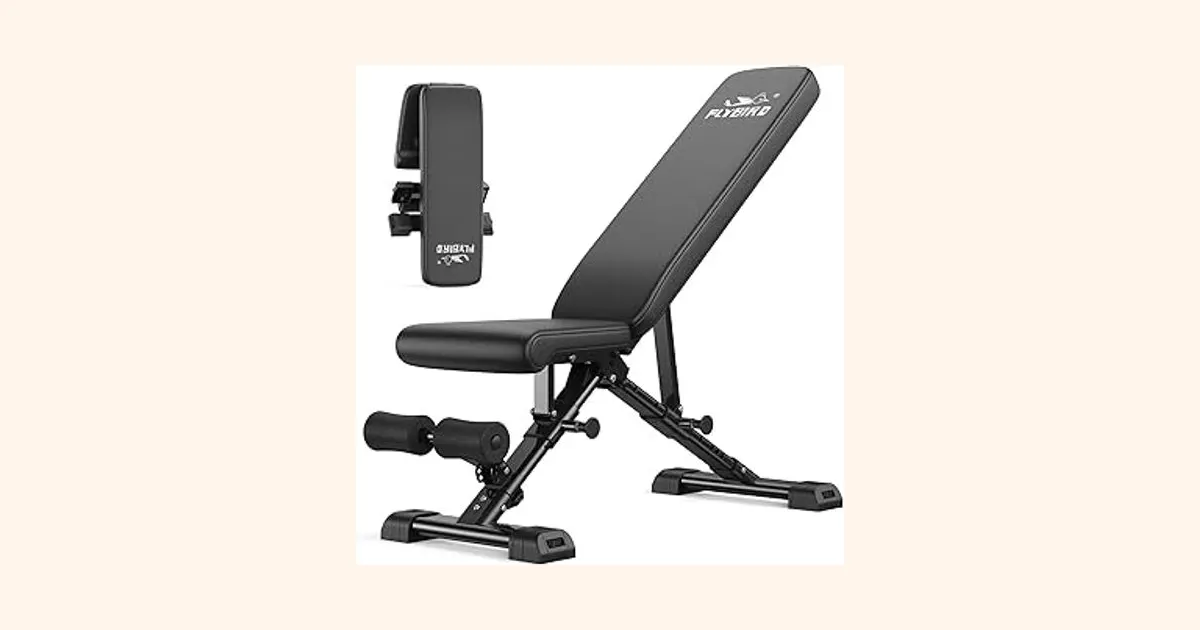
The Short Answer
When considering what to look for when buying a flat bench, prioritize a high weight capacity, robust steel construction, and a firm, dense pad. These features ensure safety and comfort during heavy lifting sessions. A stable flat bench provides a solid foundation for exercises like bench presses and dumbbell rows.
How It Works
A flat bench serves as a stable, horizontal platform for various strength training exercises, allowing for full range of motion. Unlike an adjustable weight bench, a flat bench remains fixed, providing consistent support. I use my flat bench for exercises like the barbell bench press, dumbbell chest press, and triceps extensions, where a stable base is crucial for maximizing force output. This consistent surface helps maintain proper form throughout a set of 8-12 repetitions.
Key Things to Know
| Aspect | Detail |
|---|---|
| Weight Capacity | Look for a minimum of 700-1000 lbs (user + weight) for serious lifters. |
| Frame Material | 11-gauge steel is preferred for durability and stability; 12-gauge is acceptable for lighter use. |
| Pad Dimensions | Standard is 12 inches wide, 48 inches long, and 2-3 inches thick for comfort and support. |
| Pad Density | High-density foam prevents compression under heavy loads, maintaining a firm surface. |
| Footprint | Most flat benches occupy approximately 4-6 square feet of floor space. |
| Assembly | Many quality benches require minimal assembly, often just bolting on legs. |
Benefits
- Enhanced Stability: A flat bench offers superior stability compared to adjustable benches, especially during heavy lifts like a 225 lb barbell bench press.
- Optimal Force Transfer: The rigid structure allows for efficient force transfer from your body into the ground, improving lifting performance.
- Versatile Exercise Platform: Supports a wide range of exercises including chest presses, rows, step-ups, and core work.
- Durability and Longevity: Fewer moving parts mean less wear and tear, often resulting in a longer lifespan than adjustable models.
Potential Downsides
- Limited Exercise Variation: Cannot incline or decline, restricting the angles for exercises like chest presses.
- Storage Space: While often smaller than adjustable benches, a flat bench still requires dedicated floor space and does not fold.
- No Adjustability: Lacks the versatility of an adjustable weight bench for targeting different muscle fibers or accommodating various exercise types.
Who This Is For
- Powerlifters and Strength Athletes: Individuals prioritizing maximal strength in compound movements like the flat bench press.
- Home Gym Owners with Limited Budgets: Those seeking a durable, foundational piece of equipment at a lower cost than adjustable options.
- Beginners Focused on Foundational Strength: New lifters who need a stable platform to learn proper form for basic exercises.
Expert Recommendations
As a CPT, I advise clients to invest in a flat bench with a minimum 1,000 lb weight capacity and 11-gauge steel frame for safety and longevity. I tested the REP Fitness FB-5000 and found its 3x3 inch uprights and dense pad provided exceptional stability during 5x5 sets of 300 lb barbell bench presses. Compare options from reputable brands like Rogue, REP Fitness, or Titan, as they generally offer better warranties and customer support than budget brands.
FAQ
Q: What weight capacity is essential for a flat bench? A: A flat bench should have a minimum weight capacity of 700 lbs, but 1,000 lbs or more is ideal for serious lifters to ensure safety with heavy loads.
Q: Is an 11-gauge steel frame better than 12-gauge for a flat bench? A: Yes, an 11-gauge steel frame is thicker and more rigid than 12-gauge, providing superior stability and durability for a flat bench, especially under heavy use.
Q: How wide should the pad be on a flat bench? A: The pad on a flat bench should be approximately 12 inches wide to provide adequate shoulder blade support without restricting movement during exercises like the bench press.
- weight
- weight-bench